The Water is Wild
A journey from dead rituals to the healing power of Jesus Christ
I am quite teary-eyed as I write this. Not from this way of relating to tears as something bad and something that deserves pity and needs to be stemmed. But relating to tears as waters coursing through the body, cleansing everything and revealing your somatic truth. The tears surged through me as I listened to this Christian worship song “Water Is Wild” on the line–
I've been baptized in the water
And the water is wild!
To me, it speaks to how vital it is for rituals to be alive—viscerally alive. For them to carry visible, felt impact. Not like the deadened sprinkling of water I’ve seen from pot-bellied priests in Hindu temples. Temples where young boys are fellated by their devout grandfathers while their mothers are not paying attention.
The Deception of Dead Rituals
A caveat: what I share here about my personal sexual trauma history is my subjective reality. There are no other witnesses who can verify this. Acknowledging that it may never be validated as objective truth has been a crucial part of my healing journey. Sometimes language can fail to capture the nuance of how I hold this within me, and nuance is where healing happens, so this caveat is important to share, time and again.
In my journey of recovering repressed memories of my childhood sexual abuse, I did recover memories of being fondled or fellated in temple premises back in Satara. And I know I'm not the only Hindu boy to experience that. This also isn’t exclusive to Hinduism. The Catholic Church carries its own weight of historical abuse.
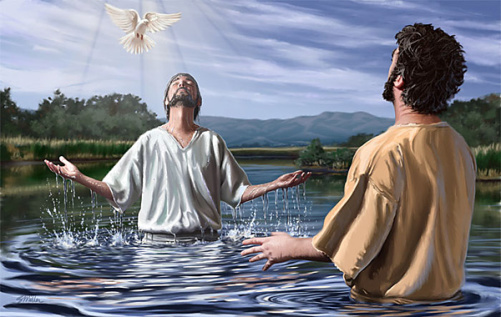
Yet, that experience really emphasizes how important it is for rituals to be alive. If holy water is sprinkled upon you and you don't cry out loud like this song does—"I've been baptized in the water / And the water is wild!"—then what even is it all about?
The Resistance to Miracles
One of the greatest self-delusions is fooling yourself that you're engaging with divinity, when you're quite plainly not. It takes quite the balance of skepticism, discernment, and faith that brings one closer to the release and complete healing that God holds for you. If you accept the dead ritual as true, the alive rituals will never reveal themselves to you.
When you allow yourself to be deceived in being connected to false divinity through a dead ritual, your entire being reacts vehemently and resorts to abusing the innocent to compensate for the betrayal.
In my exploration of the Bible, one of the stories that really reached me was that of this lady who lunges for the hem of the cloak of Jesus Christ as he's walking, and is completely healed by that. That level of miracle, I feel quite certain now, is possible. Denying the possibility of that conclusively is a delusion—a delusion born out of fear.
If you are on a healing journey and you deny the possibility of such miracles, it’d behoove you to investigate your own resistance to being fully healed. If you are on a journey as a healer and you deny the possibility of miracles, it’d behoove you to explore your relationship with wanting to extract money from your clients by making them a line item on your monthly recurring revenue sheets.
There is no shame in adopting falsehoods–like the denial of miracles–to bring order and maintenance to your life. But there is a conscious choice that you can exercise in adopting a falsehood, knowing that it's serving you temporarily, so that you can keep your heart open for the truth.
The Transactional Nature of Pagan Spirituality
I want to share a bit about the aliveness of Jesus Christ as contrasted with the aliveness of the other deities I’ve explored, who live through their stories and myths. That's not to say myths are not true or myths are not alive, but that's a certain level of aliveness where if the humans chanting the names of these deities were to stop, the myths would die out and thereby the deities would too.
These myths are beings—entities living in another plane—who feed on our devotion through spiritual transactions. They evoke somatic aliveness in us and then ask for something in return. That’s the transactional paradigm of devotion, especially common in Hinduism.
You give Modaks to Ganesha, milk to Nandi, fragrant substances into a Homa fire. You chant endlessly to Shiva. In return, you get what you ask for. Even in Aghori rituals, you meditate in graveyards—sometimes on the corpse of a Guru or an innocent—to appease Kali with offerings of blood and flesh.
This structure is not unique. It appears across cultures: in ancient Judaism, the blood of the Passover lamb was smeared for divine protection. Aztecs offered still-beating hearts to nourish the gods. Some Native American Sun Dances involved piercing flesh to offer pain and blood for strength. In ancient Egypt, servants were sometimes buried with pharaohs to serve them in the afterlife. In Greco-Roman rites, animal sacrifices were routine—oxen, goats, or birds offered to appease or thank the gods.
Over time, many of these rituals softened. A coconut replaces a head. Sweetmeats replace blood. But the logic remains: offer something of the body to gain something from beyond. It’s devotion built on exchange.
You can reach a certain level of spiritual evolution through these practices. But I’ve also felt the deadness of these entities. They are spirit beings, yes—but we carry more life than they do, simply because we are embodied. They miss that. That’s why they connect with us: to taste the vitality of human form. The offerings we make are material, and the fire serves to alchemize them into something they can receive. Or it’s the sound—vocalized through our living, breathing bodies—that sends vibrations of aliveness into their realm.
They are only alive because we are. It is our embodiment—and the fact that we direct our embodied presence toward them—that sustains their existence. Their life depends on our attention.
The Game Has Changed
These rituals are also dead in another sense: the entire game of liberation has changed since Jesus Christ entered the scene. These practices were built on an older framework of shared spiritual laws.
And if the phrase “shared spiritual laws” turns you off, consider this: just as there are laws that govern the physical world, there are also laws that govern the spiritual realm. I’ve seen this most clearly in the work of entity release. One spiritual law I’ve encountered is this—when you speak directly to the entities that possess you, they don’t lie. They tell the truth.
That alone is astonishing, given how easily and often humans lie. It reminds me of what Emanuel Swedenborg wrote: in heaven, there is no separation between thought and speech. Even darker entities seem to obey a version of that law.
But what’s even more astonishing is this: the physical realm has precedence over the spiritual. What happens in embodied form—what we do with our voice, our blood, our presence—can alter the spiritual laws themselves. The embodied has authority. That’s why what Christ did in a body changed everything.
The Buddha's Path and Its Limitations
If you’ve studied Hinduism or Buddhism, you’re likely familiar with the intricate spiritual metaphysics those traditions explore. But it’s important to remember: much of that was articulated before the arrival of Christ.
Speaking about the past is always tricky. At its core, we’re telling stories. That’s what language really is—a way to shape and share stories, whether it’s a myth about the greatness of Saturn or a theory from modern Physics. We speak in stories. We live in them. We use them to make sense of reality.
So I want to offer this caveat: you always have the agency to disbelieve a story from the past—whether it happened or not. I have that agency too. Sometimes there’s a felt sense of what’s true. Sometimes there’s evidence. But eventually, the mind makes a leap and says, “Yes, this is true.” And that leap—where and how we make it—varies from person to person.
Those who claim they never make such leaps—especially the scientist or Physics-type folks, like I used to be—are deluding themselves. They believe in experiments and mathematical derivations they’ve never personally conducted or verified. That, too, is a leap of faith. We all exercise that agency, choosing where to place our trust. That’s part of being human—part of living in a world where we speak, where we share language, where we tell stories.
Having said that, I believe Jesus Christ went to India after the Buddha had already carved out a path toward individual liberation.
But the Buddha’s path remained focused on individual effort. He explored many animistic Indian rituals, mastered them, and moved on when he sensed they were incomplete. His aim was liberation—and he achieved it. In Buddhist terms, the mark of individual liberation is gaining conscious agency over the choice to be reborn after death. And that’s phenomenal, considering most of us don’t even have the agency to not react to an angry comment on the internet (guilty, as charged).
The Buddha accomplished that. He managed to not react to angry comments on the Internet (jk).
Still, within the Buddhist framework, each of us must do the work to become a Buddha and then help others do the same. Upon attaining Buddhahood, you gain the option to step out of the cycle. But out of deep compassion, you choose to return—to be reborn again and again to help others toward their own liberation. That’s noble. But given the sheer number of people and the depth of suffering, it’s endless. There’s no final point.
Even if you personally exit the cycle, if the collective isn’t free, you come back. So have you really exited?
It starts to look like an infinite relay—one Buddha after another, born into suffering to help the next wave. When, in that model, do we actually reach collective liberation? I honestly don’t know.
Still, it was a profound development. If you’ve explored the cyclical nature of life and death in pre-Buddhist metaphysics—as encoded in astrology—you’ll recognize that the possibility of exiting the cycle was a breakthrough. A leap forward.
The Game-Changing Sacrifice
Then Jesus came—having explored the wisdom circulating in India at the time—and flipped the script on these animistic pathways of offering flesh and blood. He offered himself as the sacrificial lamb, on Passover, for the sins of humanity—past, present, and future.
In that sense, if you take the life of Jesus Christ seriously, then the game of collective liberation is either over, or it’s playing by entirely different rules than it was before Christ.
To give you a metaphor from history: you may have heard the story of the Japanese World War II soldier who continued fighting in the forests of the Philippines well into the 1970s—decades after Japan had surrendered. Many people tried to reach him, to tell him the war was over. He didn’t believe them. He even shot at them.
Now imagine being that caught in a delusion—the belief that you still need to fight to be free. That you’re still at war, when in truth, the war ended long ago. You’re trading bullets for a cause that’s already surrendered.
And what’s on the table now is full freedom. The very thing you were striving for is already yours.
That’s the good news. That’s the Gospel: the game is over. You are free. I am free. We are free. We don’t need to suffer anymore—if we can remember, even in our moments of deepest pain, that Christ has already died for our sin.
Understanding Karma and Sin
Here, I want to bridge the biblical language of sin with the Hindu-Buddhist language of karma. In Hindu-Buddhist metaphysics, every action we take sows certain seeds of karma which are determined by both the intention with which we act and the impact on the exterior world. These seeds of karma fructify at some point in our future, either in this life or in some next life. The fructification of these seeds of karma bring us varied experiences. How we respond to these experiences either dissipates the seed of karma or further entangles us into samsara. Towards freedom, or towards further misery. As such, there is a bidirectionality to our action. Towards Light or away from it.
This bidirectionality of action is simplified in the Christian worldview as sin or virtue. Sin is a choice that you are making, that is destined to worsen your condition whether you realize it in the moment or not, as governed by the Laws of Karma. Virtue is any action that you choose to take that is going to improve your state of being, whether you realize it in the moment or not.
Sin worsens your condition, virtue uplifts you. The metaphysical rules behind this–the Laws of Karma–are complex. We’re often cut off from the data needed to fully grasp them. In the Buddha’s journey to Enlightenment, at one stage, he saw how his actions shaped the circumstance of his rebirths, across all his past lives, thereby intuitively decoding the Laws of Karma.
I’ve had a glimmer of that. That’s what allows me to trust that these laws are real.
A Past Life Revelation
What I share next, take it as a story because there's no way to verify this in the rigorous way that science requires. In my own journey, I’ve remembered a past life where I was a Nazi soldier. I was offered an emaciated Jewish woman by two other soldiers who were leading a gang of rapists. They gave her to me as a test. In that moment, time slowed. I could choose to rape her and gain their favor—or resist, and likely die.
In that moment, I chose to follow Lust.
And in this life, those men returned as my grandfather and his friend. They raped me.
This memory came while I was exploring consensual non-consent play with a woman of German-Jewish heritage. And in that space, I had a flashback—not just to the experience, but to the karmic contract. Existential Kink talks about this: how we make contracts with those we cross paths with, toward each other’s liberation. These contracts are energetic and soul-level, and how we engage with them can tie us down or free us.
The Magnitude of Christ's Sacrifice
What Jesus Christ did, when he died for all of our sins, is that he suffered the entirety of pain that any of us may suffer through our sinful actions. That holds true for all of humanity–past, present, and future. Do not try to make sense of this from the linear manner of thinking that often governs the laws of Physics in the material realm.
Even though Physics is starting to brush up against non-linearity—like in relativity, where the speed of light sets a limit and things get wonky as you get closer to the limit, and in quantum physics, where wild non-linear effects show up at the atomic scale—I don’t think these ideas have fully landed in our collective scientific consciousness. Most people haven’t gone deep enough. Even many scientists haven’t fully digested what these non-linear frameworks imply. For the most part, we’re still shaped by the linear worldview of Newtonian physics.
So Jesus died for all of our sins. Trauma is the reliving of unprocessed pain. One of the worst parts of that reliving is the loneliness. You feel forsaken. Completely alone in your suffering.
But lately, I’ve felt the company of Jesus Christ in those moments. I’ve felt him on the cross. Nails through his wrists. Blood pouring. Agony. And not just as a benevolent witness to my pain from afar, but as someone in it with me, feeling every ounce of it and more.
The Presence in My Pain
It's more than I could have ever asked for. It's way more than the fantasies I've had of my father storming in while I was being raped, saving me, and killing the perpetrators. This is someone who was already there—2000 years before me—feeling my pain. Feeling the agony of every survivor. Even the agony of the perpetrators. Even the agony that lives in you, reading this.
Think about how deeply we connect with someone when we meet at the point of shared suffering. It’s not just empathy—it’s oneness. Sometimes we dismiss it as a “trauma bond,” but there’s something sacred in that resonance, in recognizing the same wound in another. In some mysterious way, the crucifixion of Christ became a moment where all of humanity trauma-bonded through him. Every wound, every betrayal, every ache of abandonment gathered in one body. And in that gathering, we were made one. That’s the moment collective liberation cracked open—not through doctrine, but through the agony we all share.
All of humanity came together in its pain, in the crucifixion of Jesus Christ. And that’s why it had to be so horrific.
The Sinless Response
Jesus knew what was coming up for him. I find myself in awe of the level of surrender he must have had to know what’s coming up and be able to embrace that and remain sinless in it. Being sinless in action and thought. Even in the depths of feeling forsaken, while all of the karmic seeds of his own past, of all humans—his apostles, Judas, people who were not even born yet, like me and you—were fructifying, and bringing him the corresponding agony, he did not lash out nor did he harbor thoughts of lashing out. He remained sinless.
He just cried out: “God, why have you forsaken me?”
I don’t fully grasp the magnitude of those words. Perhaps to comfort those of us who feel forsaken? To guide us in those moments where we feel forsaken? To remind us that we can turn towards God and ask him instead of lashing out.
The Voice of the Father
Perhaps the full meaning of that sentence will be revealed in time. For now, I’m simply grateful—for his sacrifice, for the music that bears his name, and for the voices that echo through it:
I hear the voice of my Father say, this is my child.
I hear the voice of my Father say, this is my child.
And in those moments when I have psychosomatic flashbacks—when my body relives the agony—I’m reminded that the heavenly Father burst through the doors. He claimed me as His own. And He liberated me from that pain not by undoing the past, but by offering His son, Jesus Christ, as the sacrifice that holds it all.