Disentangling Love
A reflection on the Bible, relational abuse, and the Erotic confusion of our times
I’ve been using the Bible App for a few weeks now and feel grateful for the daily nuggets of wisdom in it. The Bible carries deep wisdom that is very relevant for the times we live in. It takes a minute to get used to the linguistic forms in it—and it used to feel alien to me before I started picking up what those forms meant. Oddly, it tracks with my journey with President Trump, who also uses very specific linguistic forms (“big, beautiful bill”) that can lend themselves easily to mockery if one doesn’t spend time listening to what lies underneath those forms.
Today’s scripture really landed for me:
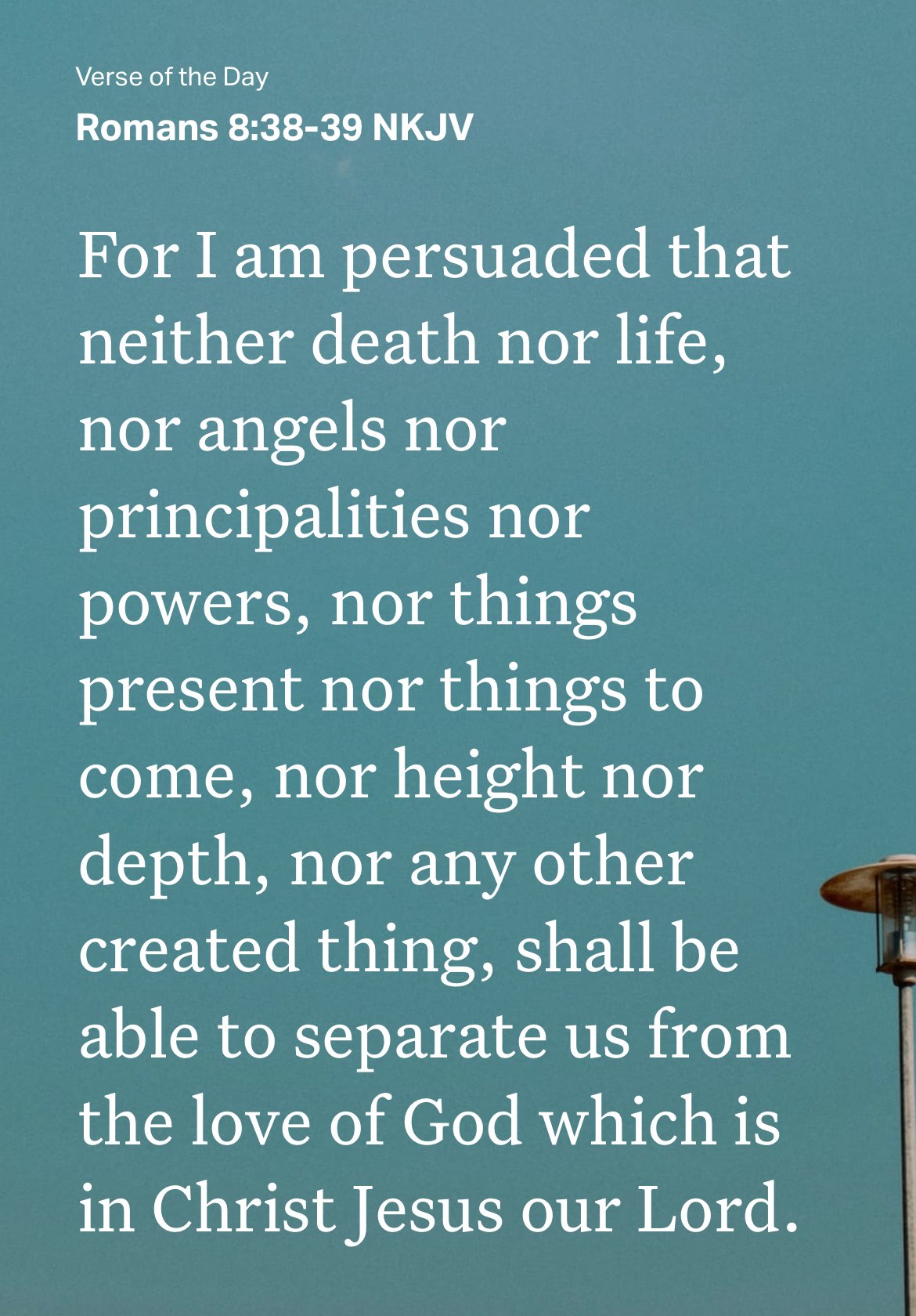
Through my journey of reading the Bible and opening my heart to Christ, I’ve come to experience what feels like the healthiest form of love I’ve ever encountered—steady, unwavering, unshakable. And it’s made me realize: not everyone means the same thing when they say “love.” That word can carry wildly different meanings depending on your lived experience.
Hot and Cold: A Familiar Dynamic
There was a moment during a Circling gathering—a relational practice that invites people to share what’s alive for them in real time—where this really hit home for me.
Before I go any further, I want to name something important.
What I’m about to share includes details from a group relational practice space. I’m not sharing this to expose or shame anyone—I won’t name names, and I’m not trying to reveal anyone’s identity. My intention is to shed light on a dynamic I’ve witnessed—one that I believe a lot of us have experienced in various forms, often without language for it.
If you happen to be one of the people involved in the story I’m referencing, you’ll probably recognize the moment I’m talking about. And if that’s the case, may this share be in service to you too. I trust that you’ll feel the spirit in which I offer it.
I’ve wrestled with how and whether to speak about things like this, because there are often confidentiality norms in group spaces—and unspoken ones in society more broadly—that sometimes make it feel off-limits to talk about what actually happens. But I’ve also come to see how those same norms can protect shadowy or even abusive relational dynamics, leaving them unnamed and unchallenged.
To me, breaking silence—when done with care, humility, and a desire to serve truth—is sometimes the most loving thing we can do.
In this particular exchange, I watched someone shift back and forth between expressing love and expressing anger. From my lens, this dynamic—love mingled with unresolved resentment—was the seed of what can become abuse. And those of us who’ve seen or lived through that pattern often develop a kind of radar for it.
What struck me most was how another participant, a woman, melted in response to that same expression. She called it love. And it made me pause—I became curious about the history (or not) of relational abuse in her romantic engagements. When I asked, her response was one of those spiritual-sounding lines: “I have capacity to hold love and anger together.”
The Carrot before the Stick
Now, this was someone I had felt some attraction toward, and I noticed my desire completely extinguish when I heard her say that. I feel grateful to be at a stage in my journey where unhealthy relational dynamics close out my erotic channels. There is no hook left from my Eros into danger. So there’s no temptation to succumb to.
Temptation. Another one of those linguistic forms often used in the Bible. It’s the carrot before the stick. And if you are short-sighted, as so many of us become when overcome with lust, you don’t see the stick. But if you exhale the lust in that moment, cool it with the softness of your presence, or breathe it up into your heart and crown—closing the energetic channel with the tip of your tongue resting gently on the roof of your mouth—you can see the stick clearly again. And then nothing about the carrot can tempt you.
Unentangling Love from Eroticism
That moment in Circling really rooted this slowly arising understanding:
Love means very different things to different people. I remember reading a comment elsewhere—someone said, dismissing the Bible, “Love is just what we feel in our heart, we don’t need a doctrine to explain that to us.” And I wholeheartedly disagree.
We do need a doctrine to explain what love is—especially independent of eroticism. Because in the spiritual culture I’ve been a part of, love has often been entangled with eroticism. And to me, that signals very clearly how much repressed sexual trauma exists in our society. Otherwise, how would love and Eros get so entangled?
This is why so many adult survivors of childhood sexual abuse struggle with the question:
“I thought they loved me. Why did they rape me?”
I once told a former lover, “You deserve safety and nourishment without needing to engage erotically.” Truly. Everyone deserves safe, nourishing love—truly unconditional love—of the flavor that’s described in this scripture, without needing to offer their body in return.
But that also means acknowledging another’s agency to 𝘯𝘰𝘵 want to engage at all if erotic exploration isn’t on the table. Trust that you’ll find that safety elsewhere. And perhaps, to receive it, you’ll need to 𝘶𝘯𝘭𝘦𝘢𝘳𝘯 your tendency to lead with eros.
I’ve begun to suspect that true Eros—the form that fosters sensuality in service of creation—actually emerges only after you allow yourself to receive this kind of unconditional love. Everything before that is posturing.
If there’s one thing I’d invite you to take from this post, it’s this: there may be more to love than what you’ve been shown. And you deserve the purest form of wholehearted, unconditional love.
And I hope you’ll allow yourself to explore how it’s described in the Bible. Because it’s beautiful. It’s absolutely gorgeous—the flavor of love described in the Bible. And maybe you explore it and conclude otherwise, which is totally fine.
But not exploring it at all—that, to me, is a loss.
Especially if you’re someone who cares about language. Someone who cares about what words mean, and how we use them. If you’re that kind of person, then not getting curious about what the Bible actually says about love… feels like a missed opportunity.