On the Exploration of Conservatism, as a Liberal individual
Donald Trump is Disgusting
When Trump got elected back in Nov 2016, I remember waking up with dread in my studio in Hell’s Kitchen, NYC. I remember being at the voting count projected on a huge screen the night before and dread sinking into a primarily liberal crowd, myself, my friends and the rest, as it became evident that Hillary Clinton was not gonna make it. Me and my then wife went home before the count was finished. I woke up the next day and checked the news to confirm the dreaded result. I was afraid of leaving my bed and had this vision of red Nazi banners with the reverse Swastika being unfurled from the high rises around me.
This was also the period of my first major depressive breakdown, which had started sometime around Aug 2016 as my marriage was falling apart. I was already experiencing sleep paralysis – I did not know back then that it was sleep paralysis. In hindsight, Donald Trump became an easy bogeyman to project my trauma upheaval onto.
He was an easy candidate as a bogeyman.
The prime emotion I feel when I experience Trump is disgust. Plain, pure disgust. My lip curls upwards and I feel the yuckiness of his presence.
He looks ugly. And he is rich. And he has a hot wife. Sufficient to trigger jealousy in any man.
Over time, I have realized that I’m not alone in my sense of disgust towards Donald Trump. As I have begun acknowledging that within myself, I’ve also noticed that rarely have I seen consistent critique of Trump from the liberal media that is not also intertwined with their own felt sense of disgust towards him.
As I have acknowledged my own disgust, I have also noticed that there are things that he pulled off as the President – like bringing Kim Jong Un to the negotiation table – that would be otherwise unfathomable for most career politicians.
The more I have allowed for my disgust to be, the more I feel annoyed and sickened by the poor quality critique of his work that is presented by the liberal media. John Oliver and John Stewart’s jokes no longer amuse me as they used to. I gain nothing of substance by listening to them and get the sense that I’m just expected to laugh along to ad hominem attacks on an individual that manages to trigger disgust in a large swathe of people.
Mixing Money & Politics
The exchange of money comes at a karmic cost. Somehow when money enters the dynamic of any relationship, it seems to really support Shadow-y behavior. It’s really hard work being upfront with one’s own desire to make money.
This is especially true when money is mixed with any service. Offering a service in perpetuity ensures a reliable source of revenue for the server, but then if the service is for releasing or fixing a problem, it requires the problem to exist forever so that the server can continue maintaining their revenue stream. This is true for healing – which is (a reason) why the western model of talk therapy and psychiatric drugs has evolved around problem maintenance rather than root cause cure.
This is also true for politics.
As a politician, once I develop my talking points centered on a societal problem, if the societal problem goes away, I’m forced to rethink my platform. If I’m looking at politics as my career, I’d be incentivized to come up with solutions that maintain the problem without fully fixing it.
I saw this YouTube video of Vivek Ramaswamy handling a question from a woman who was accusing him of not having enough credentials to even be the Principal of her children’s school, let alone be the President. And I wondered if she was aware of her own biases towards credentiality. I wonder how often major societal challenges are solved by those with established credentialed careers as contrasted with those who come from outside and bring a fresh perspective to the system. I wonder if there is rampant childhood sexual abuse in that school that her kids go to, that someone, who has learnt how to make a career out of being a school Principal, would just turn a blind eye towards.
It seems to me that there is value in considering government servants who have other ways of generating revenue to support themselves and their families – other than their career in politics, does it not?
In that sense, I think the successful election of Trump in 2016 set a good precedent for the political system. Ideally, the political system would be lean enough that people who have had successful careers outside of politics get a chance to bring their fresh perspectives to governance – this is true already to some extent in the US – Arnold Schwarzenegger and that good looking Hollywood actor President guy, ah Reagan, being two examples. I think that’d prevent situations like Nancy Pelosi Stock Tracker apps – the disgust that evokes in me is greater than imagining what Trump’s face looks like when he orgasms.
Not all Conservative movements are the same
Dualities make up so much of the manifested Universe. The essential duality in democratic political systems seems to be Liberal vs Conservative. What happens though when the values that the Conservative attempts to conserve are values of Liberty? What does a Liberal who opposes such a Conservative, then stand for? It’s quite a paradox, no? I think this paradox plays out to some extent in the American political landscape. There are Liberals that are defined by their opposition to Conservatism that are so disconnected from the American foundational values of Liberty that they are not aware of their inner paradox.
I think this is another example where it is essential to define oneself towards something or on top of some values instead of being in opposition to something. Because when you are defining your own sense of self in opposition to something, you are not accounting for the evolution of that thing that you are in opposition to. And oddly enough, your own sense of self requires that thing to persist and continue existing. Because if that thing stopped existing, you’ll have to redo your identity.
That’s not to paint all Liberals with this brush. Or to claim that all Conservatives are actually rooted in the value of Liberty – but in countries that are founded upon the values of Liberty, like say the US and France, it does introduce this paradoxical Conservative support of Liberty. And a Liberal movement in such cultures that has developed a reactive opposition to anything Conservative will eventually end up opposing its own values.
There’s of course more nuance to this. I think broadly speaking, the Conservative movement in the US attempts to uphold the values in the US Constitution (which are quite secular and devised by some brilliant philosophers) and the underlying values of Protestant Christianity that were a part of the founding populace around the birth of the US. Some of these values deserve to be conserved, others deserve to be liberalized. I believe it’s important for every self-identified Liberal person to understand what these values are and which ones deserve to be conserved and which ones deserve to be liberalized instead of being in opposition to anything and everything Conservative.
There’s this expectation I have seen and felt within the Liberal movement in the US and around the world to empathize and be in support of every Liberal movement around the world. I think this is where nuance must be exercised. Not all Conservative movements are the same. The Conservative movement in Saudi Arabia attempting to conserve the values of Wahhabi Sunni Islam is quite different from the Conservative movement in the US, attempting to uphold the US Constitution. I don’t think enough liberally oriented individuals understand this. Partly because there is a lot of passionate fervor in the Liberal cause, what with the birth of Liberalism as a world ideology being tied up with the passionate fervor of the French Revolution. In a space of passionate fervor, there isn’t enough space for quiet contemplation, unless you are a very accomplished martial artist (which most aren’t).
The lack of awareness of this nuance is what leads to odd situations like Ayaan Hirsi Ali’s critique of Islamic societies being opposed by western liberals.
The Rarity of Philosopher Founders
There aren’t many nation-states in the world which have had founding figures who were something more than power hungry despots. I think, the US and India are the really rare exceptions where the founding figures themselves were deeply steeped in wisdom. Some might argue PRC is also an example and I’d probably concede – I’m yet to study Mao’s Red Book, but my sense is that it really simplified Communist philosophy and made it accessible to the masses – whether PRC is *actually* Communist and whether Communism is even practical is a whole ‘nother can of worms.
Jefferson and Benjamin Franklin (a f’kin polymath) were both extremely erudite men. So were Gandhi and Nehru. Bismarck (founder of the modern German nation-state) was an able statesman and strategist but did not seem to have much intellect beyond that. Stalin was a power hungry despot – had Lenin managed to maintain his hold on Russia, it might have been a different story, but such is the problem with movements that are focussed on toppling the existing power structure without a good solid plan afterwards, the most power hungry despot manages to seize control in the power vacuum. Ataturk was a (phenomenal) military general.
I’m curious to read other examples in the comments, but it seems quite rare to me to have the good fortune of wise philosophers (as contrasted with brilliant strategists and statesmen) as founding figures of a nation-state.
Being steeped in wisdom allows a founding figure to have a long term vision that someone who is just an able statesman/strategist might lack. A clear example of this difference is why modern corporations will often have a CEO and a COO. A visionary CEO often lacks the day to day operational skills that one needs a COO for. And someone who is mired in the operationally of the day–to–day struggles to find visionary direction.
I think this rarity is not very well understood or even if its understood, perhaps the significance of it is not fully acknowledged by those aspects of Liberal society (within the US and India) that tend to just shit on the State.
You Have the Right to Bear Arms
I have been holding D/s sessions via Shibari for a couple of years now. The lineage of D/s that I entered has a high value on consent, agency and exploration of embodied desire. That’s not to say I haven’t messed up when it comes to consent – I have. Multiple times. But the value of exploring what is consensually exciting is upheld deeply in my heart, soul and bones and I’m grateful to have encountered a D/s lineage that upholds that.
In a D/s container, as a Dom, I’m holding space for the unfurling of the Erotic potential of the individual that has chosen to consciously submit to my directionality. The space I’m holding is in service of what Desires want to emerge in the sub. In an ideal D/s setting, I’m so attuned to the Desire of the sub that my own Desires mesh with them so that what I explore as the directional Dom is what wants to be explored in the connection.
A D/s session is an exploration of power dynamics–the Dom has the power but it is (paradoxically, perhaps, to those of you who have not experienced conscious kink) exercised in service of the Sub. A critical aspect of this exploration is that the Sub has ultimate agency to stop the session with a safe word. The moment the safe word is uttered, every thing stops. Even if the Dom were to be engaged in a consensual non-consent play, humiliation play, impact play or any other kinks that might be typically considered ‘edgy’ or ‘crazy’, once the safe word is uttered, the Dom steps back and stops the container. Ideally, the engagement is such that the safe word never needs to be uttered. However, the existence of the safe word is what *allows* the fullness of exploration while maintaining consent. It allows a sub to explore a Desire to experience rape role play so that they can rewire what they experienced in an actual rape from their past knowing that they have full agency in stopping it at any moment or pausing to integrate.
There are two types of people. Those who understand kink and those who don’t. Those who understand Shadow work and those who don’t. Those who can acknowledge and work with their Shadows and those who live lives enmeshed with them. If you are the latter kind, I’d encourage you to pause here and explore this work for yourself before you continue reading.
The 2nd Amendment is the Safe Word in the power hierarchy of the American society. Wherever there is a power imbalance, there is an inherent underlying game of domination-submission going on. The Federation as the Dom allows the States to bear arms and exit, and thereby supports the full agency of the State. The State allows individuals to bear arms and exit and thereby supports the full agency of the Individuals.
Now, of course, if you, me and 4 other people decided to bear arms against the State of North Carolina or the Federation of the United States, we are likely gonna all end up dead. Not too dissimilar from a D/s situation where a Sub utters the safe word but the Dom refuses to acknowledge it and the Sub ends up re-traumatized. But that’s besides the point. It’s the provision and permission to bear arms that maintains and allows for a society that supports the emergence of Agency in an individual.
In the Agency of an Individual, and the accompanying support to recover from poor choices, emerges Innovation. Innovation is inherently Individual, in that it is a specific individual’s unique creative essence that brings something of tremendous value to human society. Yes of course, you need teams to manifest a creative vision. But an innovative creative vision is rarely born by Committee. That’s not to say that groups can’t be creative. In fact, there’s nothing more powerful than a group of agentic (a new word I learnt and borrowed from a new friend) humans coming together and bringing a creative vision forth by tapping into the group consciousness field of that moment in spacetime. *However*, that requires each human’s own access to their individual creative agency. A Committee of disconnected humans attempting to follow some corporate dictum has never accomplished anything of significance as much as they might have metrics to prop up their self worth upon.
It’s the right to bear arms, the knowing and stabilizing oneself in one’s access to the Final Resort, that allows for sufficient safety so that Creativity can unleash. Now not every creative individual living in the US may realize that this right is the foundation of their creativity because what hte 2nd Amendment brings to the US society is seeped into the fabric of the society in a manner that an artist born and brought up in Brooklyn might just take for granted and it’d need the lens of an outsider to see this clearly. As an outsider, I’m still wondering about it – in that it continues to be an exploration. There’s something to it though, the fact that the US is the only nation-state that has the 2nd amendment (is that right?) and that the US (without a doubt) is where the most innovative ideas come from. Every time an Internet liberal quotes the “success” of socialist democracies in Scandinavia, I have the urge to ask them how they’d have broadcast this opinion to a random stranger on the internet had it not been for the innovation of the Internet, Social Media and Smartphones – all American inventions.
Often when folks share their world view, I wonder what was it in their own inner exploration that fostered this world view. So I’d like to address that curiosity. I partly did so when I talked about my D/s explorations. But even underneath that draw to a D/s lineage that upholds consent and agency is my own work with my repressed childhood sexual trauma. In the journey of releasing the Rage that I hold towards my perpetrators, I realized that it was essential for me to allow the Rage to be fully expressed so that I can then make my way towards the Grief that I carry for being raped before I even understood what sex was leave alone what consent was. And that both Rage and Grief needed to be honored before I could consider Forgiveness, which remains in my heart as an ultimate goal. For my own peace more so than anything else. And in that exploration of releasing Rage, I realized that I had to consider the option of seeking vengeance on my perpetrator (the one who is still alive). It was necessary to connect to the fullness of my own humanity to realistically consider killing him. Since then, I’ve realized that it is indeed a *very* human trait – the desire to kill another. It is human in the sense that humans have been doing this for ages. For eons. It’s in the archetype of what it means to be fully human. Any human who believes that they can’t kill another being are just disconnected from this aspect of their essential nature. The disconnection is even worse if they then continue eating any food that requires a sentient being to be killed. To truly forgive, one must accept one’s innate capacity to kill, one’s shadowy desire to kill – I’m not saying everyone has this desire in their shadows but sufficiently traumatized beings definitely do and who isn’t sufficiently traumatized in the Kali Yuga that we live in today? I’m not sure.
The Challenge for Conservatism in the US
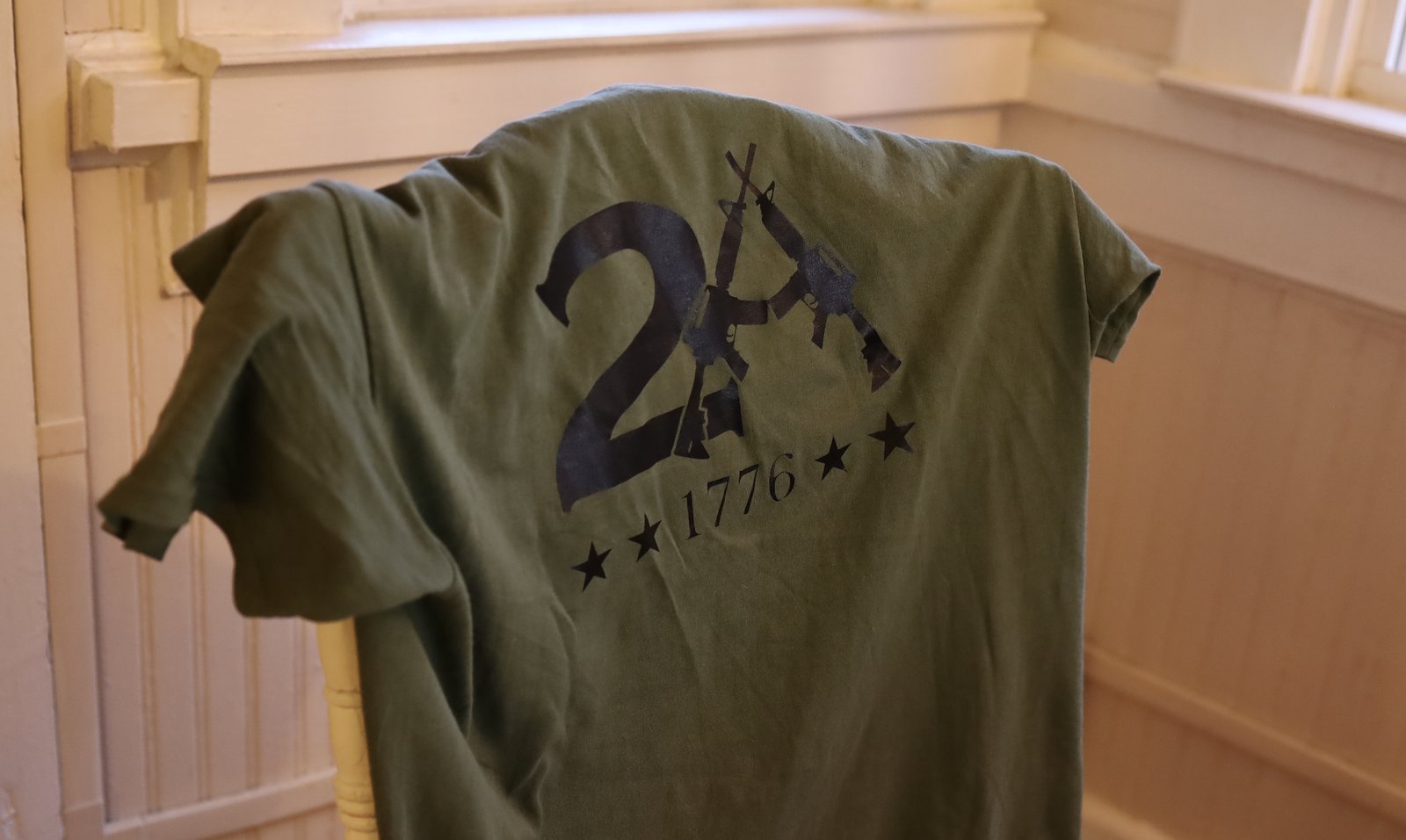
Most of my journey into exploration of Conservative thought in the US has been through Vivek Ramaswamy’s run for the Republican nomination. There was a telling moment in a video clip of his wife speaking to a middle-aged white Republican couple in Iowa who liked him but wouldn’t vote for him. When asked why, they nonchalantly said – “well, you know, because he is Indian”. There was another clip recently where Vivek spoke with that horse-faced white Republican commentator lady – I forget what her name is – Ann Coulter, yes – who plainly stated that white Americans are more American than darker skinned Americans because they’ve been imbued in the values upon which the country was founded for much longer than darker skinned immigrants have. As edgy as it was for me to hear that, I was quite impressed with how Vivek handled that assertion. There’s some truth to it. It is true, to some extent, that someone who has been generationally brought up in the values of a culture is more accustomed to it than someone whose parents were brought up in a very different culture. And yet, my friend who grew up in the deep South around folks wearing 2A t-shirts told me that my own understanding above of 2A was much more eloquent than what any of them could present. There’s something about having fresh eyes that see things more clearly. White Americans are able to get to the heart of Hindu mythology in a manner that many Indians struggle to because their vision is not clouded by the caste and economic class biases that Indians have. Similarly, an outsider like Ayaan Hirsi Ali can see much more clearly the value of Liberty in western society than the western liberals, who criticize her, can.
As such, I think, the challenge for Conservatives in the US is to accept the possibility that someone who looks very different from them can actually resonate deeply with the core values that they believe in – consciously or unconsciously. I think the ones who are conscious of the values they believe in are better able to see this than the ones who are oblivious to it.
Am I a Liberal or a Conservative then?
As I went deeper into this journey, I began to wonder if I’m no longer “liberal”. But then I went to my local barber who is (seemingly) conservative. And he made a comment about how he was surprised that I worked as an engineer because “most of y’all are doctors, aren’t ya?”. And I chuckled amused at what I’d label innocent racism that was also completely off the mark. Contrasted with the (seemingly) liberal yoga teacher at West Asheville Yoga who asked me to repeat my names 3 times during the class because she did not want to mess it up – when she had gotten it right the very first time and she was perfectly enunciating Sanskrit words like Saadhana during the class. I honestly found the latter more annoying – because there was an innocent honesty in the former. And yet, that experience with the barber made me realize that I’m way too worldly of a being to be a “typical Conservative” – which is what I was wondering if I was. And on the flip side, the Conservative ideas that I feel resonant with don’t seem to be imposed on me from without. In my heart of hearts, I feel deeply Liberal and in service of the emergence of Sovereign Agency of every individual on the planet. In some ways, this duality seems quite silly, especially in a country founded upon liberal values like the US. A lot of my own connection to Conservative values has come from a deep embodiment journey and when I look around at Liberal culture, I see a lot of disembodiment. The loudest liberal voices on the Internet seem like deeply traumatized beings who are attempting to heal their trauma by yelling at the system. I don’t think that’s going to work. I think we need to reclaim Liberalism, those of us who are able to hold nuance, maintain humility towards the unknown, value embodiment and support Sovereignty over Victimhood. There’s more to this journey, but suffice to say, it’s been quite eye-opening.