Flaws in Common Arguments against Astrology
Courtesy of a better understanding of my own reactive dismissal of Astrology
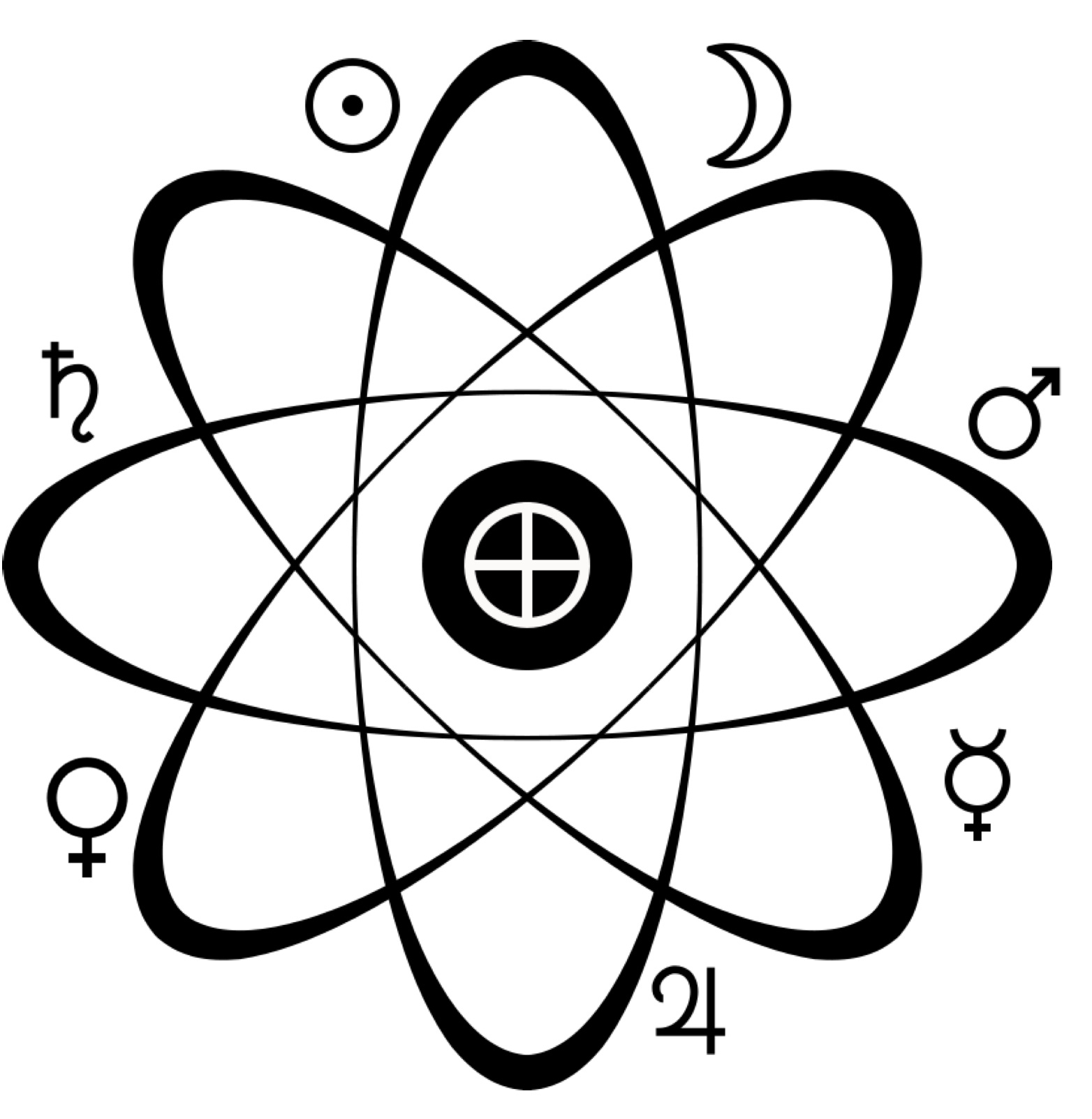
In this document, I present the flaws in common arguments used against Astrology. My past selves have subscribed to each of these arguments with deep conviction. As I questioned this conviction over the past couple of years, I unearthed some flaws. These are the flaws that I present in this essay. If, while reading this article, you feel like I’m mocking you for something you said, please know that I’m only mocking my own past self. I’ll note that I don’t intend to prove the validity of Astrology here. That remains an open question for my skeptical incursions.
“Astrology is completely random. There is no empirical evidence for the association of personality traits with birth signs.”
I used to think this was very obvious back when I had a very simplistic cursory understanding of Astrology. More specifically, I thought that Astrology was equivalent to sun-sign Astrology.
Sun-sign Astrology is a lo-fi version of Astrology. Imagine, for a moment, a 3 dimensional geometric space. Imagine data points distributed in this 3 dimensional space. Data points that have specific patterns associated with them. Patterns that are very visible in this 3 dimensional space. Now let’s look at all the x coordinates of these data points and imagine these to be randomly distributed along the x axis. Would you look at this random distribution of points along the x axis and conclude that there are no patterns within these points? If you were a Machine Learning engineer trying to find patterns in this data set, would you assume defeat if your first attempt at defining a feature set returned a high error rate? Or would you consider expanding your feature set?
Sun-sign Astrology is a 1 dimensional collapsing of the Astrological model. The Astrological model contains Planets, Signs and Houses. Simplistically speaking, one could think of Planets, Signs and Houses as 3 dimensions of Astrology. There are 10+ Planets, 12 Signs and 12 Houses. Sun-sign astrology focuses on one Planet (i.e. Sun) and the 12 Signs and completely ignores the Houses. Using simplistic analysis, that’s like looking at 12 possibilities out of 1440. No wonder it’d then be easy to dismiss Astrology as random.
“Astrology is a scam.”
This argument conflates a knowledge with the common usage of that knowledge. I consider Astrology to be a body of knowledge. For now, I choose to punt on whether this body of knowledge has value as I’m still exploring it. People who scream that “Astrology is a scam” are really claiming that “People who use Astrology are often scamsters”. The latter is a true statement, the former isn’t. These scamsters are sometimes intentional, sometimes unintentional. This happens because the body of knowledge - Astrology - makes some powerful predictive claims. Hence, it tends to attract the gullible hoping to find direction in their life. People who are scared of the future and hence want to know the future. It’s no surprise then that Astrology attracts scamsters. Supply finds its way to demand. Some scamsters are intentional where they don’t fully understand or desire to understand or believe or desire to believe in the power of the body of knowledge and leverage their incomplete knowledge and understanding to separate the gullible from their money. Some scamsters are unintentional where they believe in Astrology, believe that they understand Astrology (see Dunning-Kruger effect) and are effectively just good listeners and givers of advice and hence attract innocents willing to pay for such advice. In either case, the practitioners are scamsters. The body of knowledge isn’t. Now the body of knowledge may be wrong, but I won’t be addressing that right now primarily because I don’t understand enough about it to make a strong conclusion.
“What kind of fool would believe that the gravity of planets influences the life of a human at birth!”
This argument is often accompanied with a reference to Newton’s inverse square Law of Gravity which states that the strength of gravitational force of an object on another decreases per the square of the distance between them. If applied between a planetary object, like say Jupiter, and a human, one could conclude that this force is infinitesimally small. Hence, it’s improbable that this gravitational force would have any impact on humans.
The flaw in this argument is due to the use of an equation from Newtonian Physics to make strong claims. The 20th century revised Newtonian Physics and replaced it with Relativity and Quantum Mechanics. Relativity concerns Physics of movements at speeds close to the speed of light and introduced the idea of spacetime - a unified way of looking at space and time. It also established that the Gravitational Field was equivalent to spacetime and that it was a continuous entity. Quantum Physics concerns subatomic spatial dimensions. It introduced probabilistic measurements (waveforms) in a world that usually dealt with discrete, definite measurements (particles). It proposed that every Field (including Gravitational Field) was discrete. The major discrepancy between Relativity and Quantum Physics concerns the Gravitational Field. One claimed that it is continuous, the other claimed that it is discrete. This is the problem of Quantum Gravity. We have two main competing models of understanding Quantum Gravity - String Theory and Loop Quantum Gravity. Neither are fully accepted and Quantum Gravity remains an open problem.
In other words, we haven’t yet evolved the Newtonian Gravitational model to account for the advances of Relativity and Quantum Physics. How then can we use Newtonian Gravity as our basis to pooh-pooh the Astrological claim of planetary influences?
Independent of arguments concerning planet’s gravity, Astrological schools of thought have a couple of flavors - causative and correlative. What I presented before was a potential flaw in the “scientific” argument against the causative school. The correlative school claims that the ordering of the planets correlates to events in the world, just like the clock indicates time but doesn’t create it. Subscribing to the argument then would entail ignorance of the correlative school.
“The burden of proof lies on them, not us”
I thought twice about including this argument. I find it quite silly to be honest. To be fair, I’ll again state that I’ve used it myself in the past and I find it silly that I used it. It seems to assume an us v/s them separation. Us, the scientific community. Them, the astrologers. This argument implicitly accepts defeat but wants to maintain a haughty face. It demonstrates intellectual laziness. And as such isn’t really an argument against Astrology. But really is a lack of an argument against Astrology. “I don’t have anything more to say. I’m not going to believe Astrology and it’s the duty of the Astrologers to prove themselves in the court of Science before I change my belief. Till that happens, I refuse to expend time and energy in understanding Astrology”. The flaw in this argument is that it is fundamentally uncollaborative in the giant scheme of things.
“Astrology is geo-centric. We know for a fact that the universe doesn’t revolve around the Earth but the Earth revolves around the Sun”
But is that true though? Is it true that the Earth revolves around the Sun? Is that statement complete and correct? I claim that it isn’t complete from a scientific perspective.
The Earth revolves around the Sun under the Sun’s frame of reference. And the Sun revolves around the Earth in the Earth’s frame of reference.
Copernicus caused the shift of our understanding of the universe from being Earth-centric to being Heliocentric. Later on, physicists discovered that the Solar System itself revolves around the center of the Milky Way galaxy. And that the Milky Way galaxy itself moves as the Universe continues to expand. So what does it even mean to ask the question whether the Earth moves around the Sun or the Sun moves around the Earth? Even classical Physics i.e. Newton’s Laws of Motion are stated with respect to a frame of reference.
What then did Copernicus truly mean when he concluded that the Sun doesn’t revolve around the Earth but the Earth revolves around the Sun? How would we rewrite his claim while incorporating the idea of frames of reference - an idea that became cemented in Physics after his time.
I believe it’d look like this-
In the Sun’s frame of reference, the orbits of the planets follow simpler and more beautiful mathematical equations whereas in the Earth’s frame of reference, they don’t.
And therein lies a fundamental assumption in the exploration of the universe via the lens of Physics. Physics loves Math. The prettier and simpler the Mathematical equation is, the likelier it is to get adopted by Physics. I believe this happens because the reptile brain or System 1 (per Kahneman’s “Thinking, Fast and Slow”) of humans is attracted to simplicity. This bias is visible in the effusive manner in which physicists describe the beauty of mathematical equations. But why should the complexity of the Universe succumb to simple Mathematical formulae? What is more important? A venture that desires to understand the Universe in its whole or a venture that favors only those formulations that can be described by pretty Mathematics.