Ex falso quod libet
From a Falsehood, anything follows. But does it though?
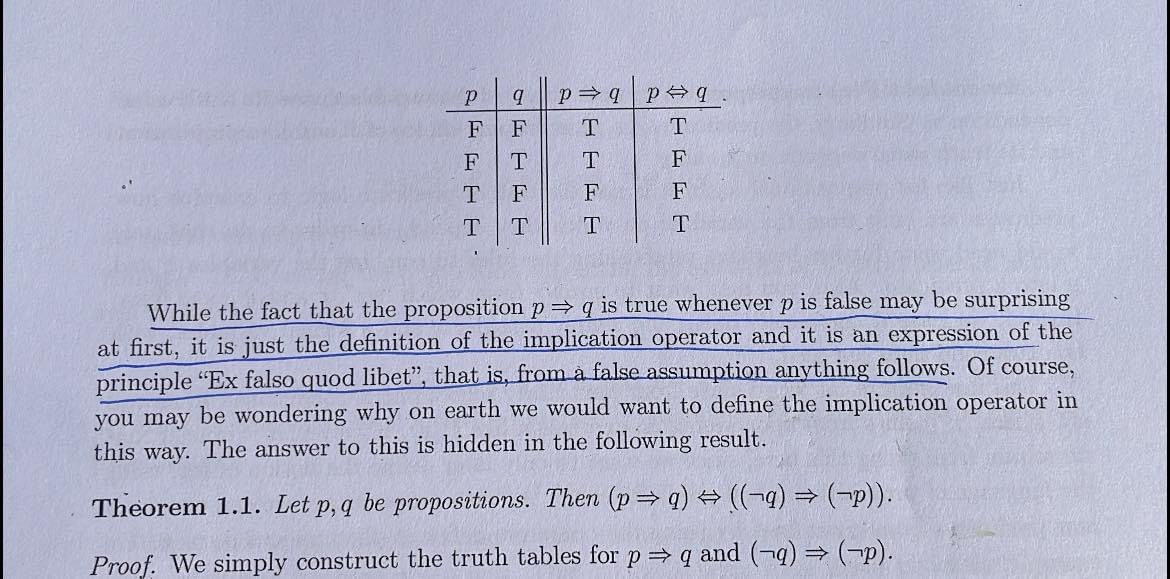
(From Chapter 1 of “Lectures on Geometric Anatomy of Theoretical Physics”.)
Classical Logic, as developed by the Greeks (Aristotle & co.) is the foundation of all the mathematical theories of Physics.
A lot of modern mathematics (Set Theory in the 1800s) and modern Physics (1900s) has had a panicky attitude towards paradoxes (Cantor’s and Russell’s Paradoxes in Math and the Wave/Particle Paradox in Quantum Physics). Once a paradox is encountered, scientists and mathematicians panic and declare a great defeat and attempt to construct a new theory that’d be rid of all paradoxes (Gottlob Frege is a good example).
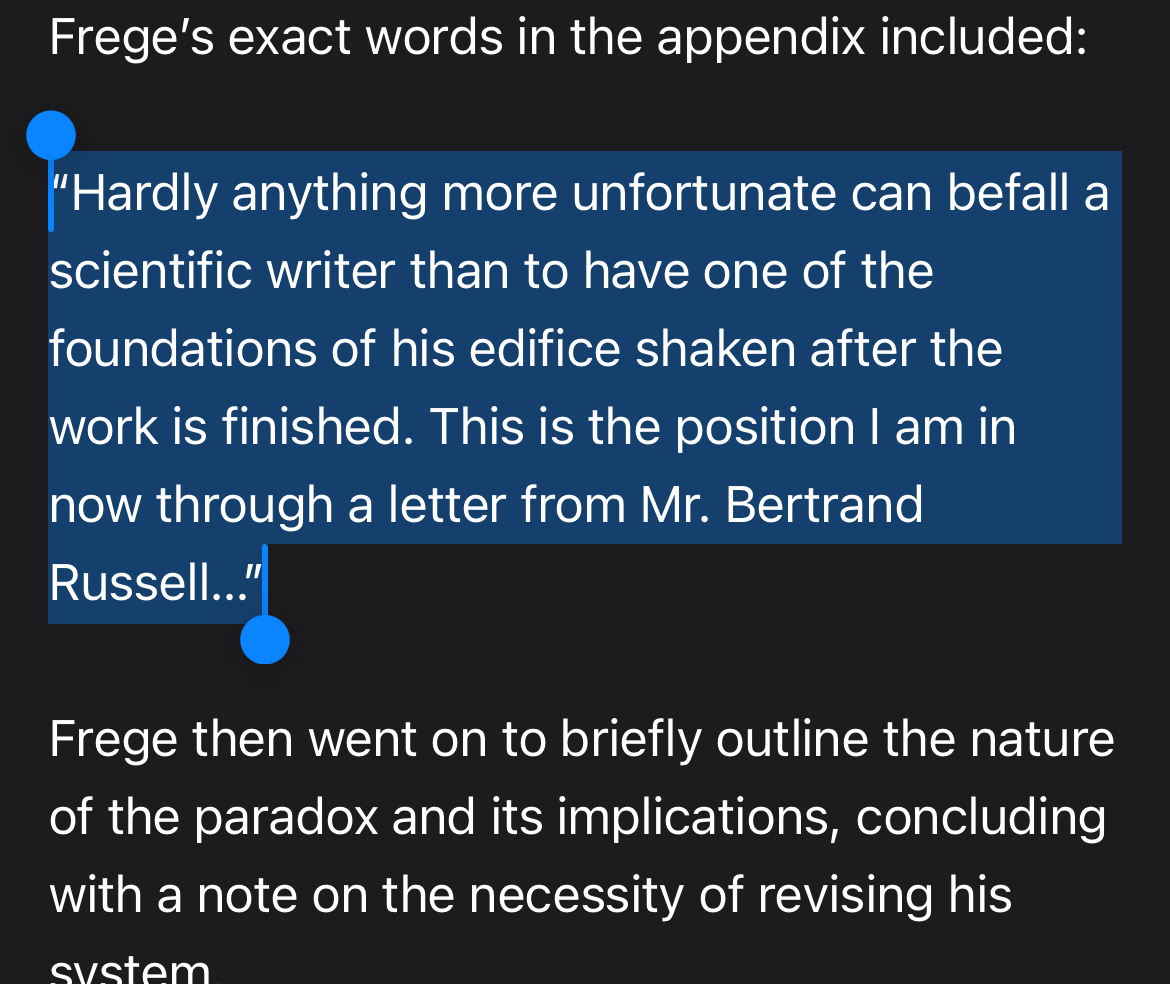
Instead of attempting to construct theories that are rid of paradoxes, what if instead we attempted to create theories that encompassed paradoxes in their inherent design?
I’ve been exploring the history and foundations of western knowledge systems (Physics and Mathematics), to find the weak bricks.
This particular one — the definition of the implication operator — seems like one of the weak ones. The implication operator is critical in that it determines the structure of what counts as a proof. An implication is a building block of a proof.
It’s truth table feels fairly sound (to me) other than for when p is F, and q is T. Why would p =>q be T in that case? How could a Falsehood imply a Truth?
It’s because the Greeks thought that from a false assumption, anything can follow. In my direct journey of exploring truth, I have experienced that falsehoods are stopping points. Falsehoods lead to falsehoods. Falsehoods leading to truth, has not been my experience.
I wonder what the Buddhist take on this would be…
I also wonder what would happen to the structure of Logic if this definition was edited and we had F, T, F instead of F, T, T.
Even underneath that is the definition of a proposition itself which is defined to be a variable that can be T or F and no other. At first glance, I wondered if this definition itself makes it impossible to encompass paradoxes in Logic. But with the use of quantifier operators (for every, there exists), it’s actually possible to encompass paradoxes. I think that even in the case of paradoxes, a proposition is T or F given the specific set of conditions. And this definition can actually account for propositions changing truthiness depending upon the observer as the observer can be represented as a variable.