A Troubled Man
The Weight of Unreleased Grief and the Spirit That Heals
Thu Mar 6
I woke up early today. My sleep first broke around 12:30 a.m.—at least, that’s what Siri tells me. I had gone to bed before 9 p.m. After that first break, I drifted in and out of a semi-awake state until 4 a.m., when I woke up fully.
Last night, I felt an upwelling of tears, somewhere behind my eyes, in the back of my head. Sometimes when grief rises but is unable to make its way out, that’s where I feel it collecting. Video calls with my father bring their challenges. There is a deep yearning within me—to cry freely while being held by him. That, I think, would be the truest flavor of connection right now. And yet, time and again, here I am, asking how much a cappuccino costs in Sydney, listening to him talk about his business in the American market, discussing the impact of Trump’s policies on their Mexican factory.
I release tears as I write this. If you are reading it, I wonder if you can feel it as that little voice in your head is reading these words aloud. Do you even have a little voice in your head? I’ve often considered that voices in our minds might be the whispers of disembodied spirits—some leading us toward wisdom, others toward misery. Meditation, in a way, is the practice of not reacting to them. Just staying still as they continue their chatter, learning to disidentify from them.
One could stay still forever, until the body withers away. There are stories of Tibetan monks doing just that. But then, there are also spiritual texts—like the Bhagavad Gita—that exhort us to act. To stay still or to act: that seems to be the essential choice, moment by moment.
I wonder how this dichotomy fits within the greater one—fate versus free will. Perhaps, when an action is strongly fated, the voices pushing it become insistent. We may resist, choosing stillness over and over again, until at last, the movement becomes inevitable. And yet, from the outside, the action may seem instantaneous even though internally it comes from a deep practice of stillness. The colloquial phrase–time slowing down–points to this.
A heightened perception of all that surrounds you. An awakeness like you typically don’t experience. A simultaneous expansion of perception in all directions while momentum builds toward one. These are the traits of a fated moment—a fated meeting—a synchronicity. The kind of moment easily dismissed as a “funny coincidence” in a materialist, science-identified worldview.
And then, once the action is taken, the magic vanishes. We are dropped back into consensus reality.
As I write this, a particular memory floods in. A meeting. Not a dead-end corporate one. A meeting of souls, for the first time in this lifetime. I wonder if you, reading this, can see the circumstance of the memory that is alive in me. And if you are the person I was writing about, I wonder if you can sense it. I wonder if it would feel too vulnerable to check with me—or if you’d be embarrassed if it wasn’t you.
Embarrassment, I find, is one of the hardest emotions to hold. It lives very close to the fear of ostracization, that primal terror of being cast out.
The best way to work with embarrassment is through awkward segues, which, coincidentally, is exactly what I’m going to do now.
Some of us have chosen to live lives of public vulnerability. I am one of them. And yet, I sometimes fear being reduced to “a troubled man” by others—particularly by men who long to express their own pain but lack the tools, the training, or the privilege to do so. History has plenty of examples of philosophers and writers who laid their struggles bare, only to be dismissed in that way.
Perhaps that’s part of my difficulty in relating to my father. I sense the depth of his unexpressed pain—perhaps more than he does. Maybe that’s why babies cry so much. Maybe they can feel the grief their parents refuse to release.
And perhaps that’s why my sleep was restless last night. I went to bed with an unreleased heart.
Tue Mar 11
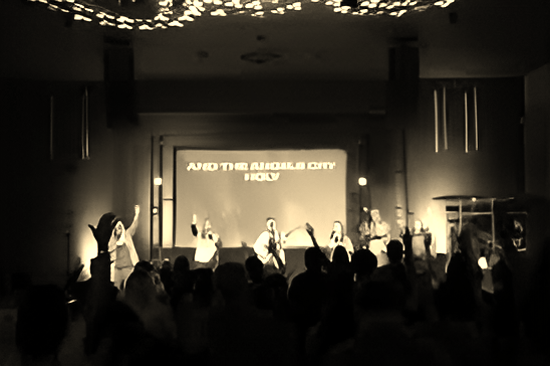
Grief release is essential. It lightens the heart, opens the way for creativity. And yet, there are so few spaces that welcome it—let alone cherish it. I was fortunate to find one this past Sunday, at a different kind of church, invited by a friend. It felt like an indoor rock concert, except all the songs were in praise of Christ, Yeshua. There was something profound about so many humans orienting themselves in the same direction, toward this great being—who definitely existed, who might even be God.
I wept and wept.
I turned around and saw my friend weeping, too.
It’s difficult to describe the experience of crying in the presence of devotional singing. I sometimes feel something similar when listening to Krishna Das, especially when he lands into the Jai Ram, Jai Sita Ram chant. There’s a cleansing in it, a feeling of being filled by a Holy Spirit.
And in that filling, there is no room for lesser spirits—the ones that fuel addiction, illness, chronic suffering. The ones that might be causing your body to attack itself and create cancers, tumors and autoimmune conditions like psoriasis. It seems that when the Holy Spirit flows through, they simply dissipate. It’s magnificent.
It’s also impossible to explain. If you haven’t experienced weeping in the presence of devotional music, I don’t think I can make you understand.
And yet, I wonder—why, in the American South, where Christ is worshipped so fervently, are so many people still suffering from addictions, poor eating habits and rampant abuse. Does the experience of being cleansed by the Holy Spirit not stay with them when they leave the Church? It’s quite the mystery.