A Simple Framework for Choosing the Right Partner
I’ve just had a really useful clarity — a working hypothesis, you could say — about what drives success in dating and long-term relationships. Only time will tell if it holds up, but for now it’s been clarifying for me. I see three distinct components.
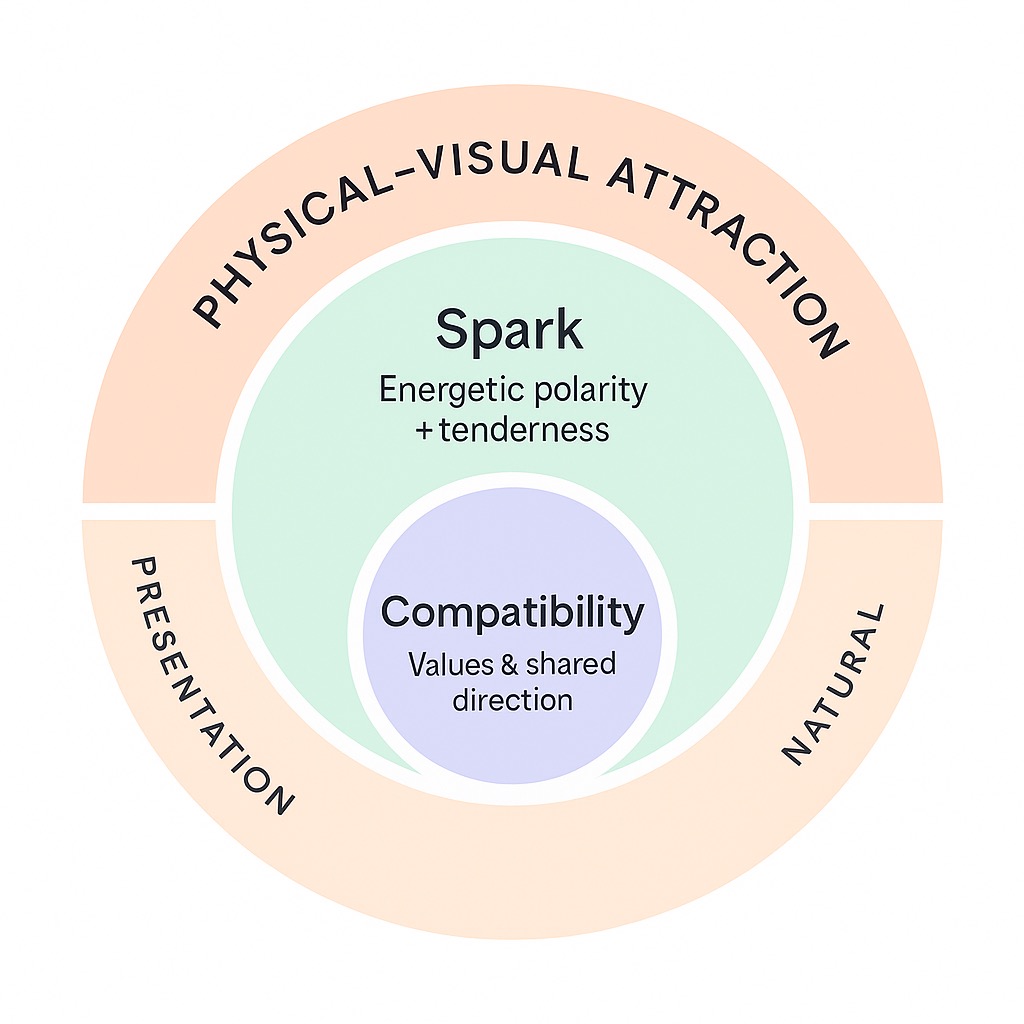
1. Physical–visual attraction
This has two layers: a presentation layer and a natural layer. The presentation layer is how someone shows up and prepares for an occasion. The natural layer is how they appear without preparation. Both are often dismissed as “shallow,” but they aren’t.
The presentation layer signals an orientation toward ritual – does this person value connection enough to prepare themselves for it? The natural layer shows how someone cares for their body. The body reveals health – not just lack of disease, but vitality: muscle tone, low inflammation, strength, radiance. How someone stewards their own body says a lot about how they’ll care for everything else, including a partner’s body.
There’s also a subtler layer here: how another person’s attractiveness affects your sense of self-worth. Many people unconsciously try to date within a similar “attractiveness band” to avoid feeling insecure or unworthy. But the deeper work is to be rooted in your own self-worth and honest about whether you’re genuinely attracted — without collapsing into status comparisons.
2. Spark
Spark is different from physical attraction. You can find someone attractive without a spark, or feel a spark with someone who isn’t your physical type. Spark lives in the connection itself. It tends to show up when two people have cultivated similar tenderness of heart and enough energetic polarity. That tension creates a spark.
Spark can surface old wounds – which might lead to healing or to entanglement. It’s powerful and tricky. I used to think you had to be
physically intimate to know if a spark existed. Now I think you can sense it energetically without that. This realization even opened me to the idea of not kissing my future wife until marriage.
When there’s spark and physical attraction, I trust I can create chemistry if we both have some skill with the pleasure body. That skill can look technical or strategic — knowing how to move, when to pause — but underneath all of that it’s really the capacity to stay soft and open in the heart. It’s the ability to be with whatever emerges in the depths of intimacy, even when old demons rise up yearning for release into the light without yet knowing that’s what they seek.
3. Compatibility
This is about values. Values determine what happens when the spark stretches you to your edges – when your tenderness meets deep polarity and old material surfaces. Free will lives here: both people choose their direction. It’s very hard to change another’s chosen direction once you’re in a highly charged romantic moment.
If your values align, that polarity can deepen love and bond you. If they don’t, it often drives you apart. Exploring values early gives you a sense of whether you can come together in those intense, defining moments. And when you can come together in the tense, less-passionate phases of spark – when it feels edgy or uncomfortable rather than romantic – that’s what gives the spark space to evolve into a deep, roaring fire.
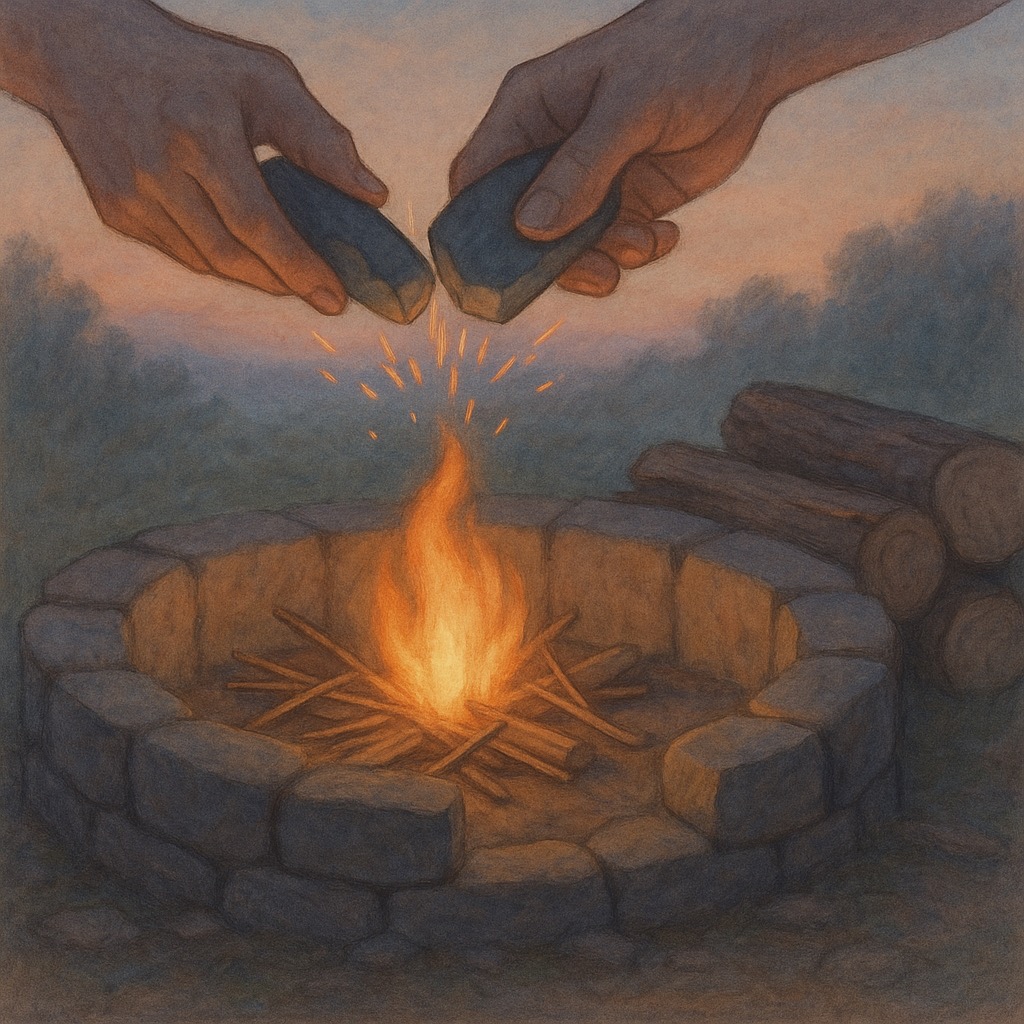
Compatibility is the fire pit — the solid container built from shared values. Without it, any flame just flares and dies or burns out of control. Spark is like striking flint — two distinct but resilient surfaces meeting with enough difference and enough tenderness not to shatter, but to ignite. Physical–visual attraction is the dry tinder that first catches the flame; it’s what lets the fire take hold and burn brightly at the start. From there, you keep feeding the fire with the deeper wood — the ongoing fuel of aligned values and shared direction.