A New Moon night at a crematorium
In search of the Goddess of the Graveyard—Smashan Tara
Tarapith, near Kolkata
It’s 4am. I am waiting for the shared rickshaw that’ll carry me back to Rampurhat train station after spending a couple of hours walking around on a New Moon night near the temple to the Goddess Tara and the nearby cremation grounds.
I see a roadside tea vendor selling cups of chai in cute little earthen pots. I get one for 10 rupees, take a sip and can’t tell if it’s tea or coffee over the predominantly sugary sweet taste. I consider asking him but then decide against it thinking it’d be rude. I throw it away.
There’s another vendor nearby. A lady. She tells me she likes to make her tea less “mishti” (Bengali word for sweet). Bengali is a very sweet language, missing the harsh consonants you’d find in Hindi or the even harsher ones in Marathi.
I get a cup, take a sip. This time I can confirm it’s tea, albeit still one of the sweetest cups I’ve had. I’m reminded of making a cup of my masala chai for the lady who used to cook for us at the martial arts ashram I spent. She took a sip, smiled sweetly and proceeded to add a ladle (yes, not a teaspoon, not a tablespoon but a ladle) full of sugar to the cup (not a teapot, but a cup) I had handed her as I watched aghast.
I saw a bundle of neem twigs (used in olden days to chew on and brush teeth with) for sale. I asked her where she gets them from. She said from a big neem tree in her village. “Is this what you use every day to brush your teeth?” “No, toothpaste”, she smiles.
I saw a couple of rituals.
In the first one, a woman was seated behind a curtain with the main “priest”. There was a fire on the other side of the curtain. The woman had some troubles so her family had brought her here. The ritual went on for a bit, after which the curtain went down, the priest leaned back and a few of his “disciples” rushed ahead to massage his legs and arms like you’d see between rounds in a boxing match.
The second one was conducted by a lady. I watched from a distance. Part of me wanted to approach mostly because of the warmth of the fire but then I felt quite alien, so I chose not to. This one felt softer. Rice and other things offered to the crackling fire. Peppered by loud screams of “Jay Tara!” “Jay Ma Tara!” by drunken groups of devotees. One such group came in near the ritual and I witnessed a classic “drunk friend” scene. You know, the kind where a really drunk man wants to do foolish things, and his slightly sober friend is tasked with restraining him. I couldn’t understand the language but seemed quite obvious to me from the dynamics between them that this was a classic “drunk friend” moment. The only difference between the scene here versus a scene in a NYC bar or on a beach in Goa was that the drunk friend wanted to do things like prostrate in front of the idol of the Goddess in the center or go closer to that ritual, instead of say hitting on a girl who has said No 5 times already or running into the sea.
I stepped out and saw a line forming to witness the main temple. Classic Indian temple scene with folks hustling you to safeguard your shoes, sell you pedha (a standard sweet offering—Bengalis spell it as pera). The fierce intensity of Smashan Tara docilely folded into the Hindu temple industrial complex. After a plea to the hustlers to let me have a moment with the Goddess from the outside, I felt into Her for a bit and then left.
Fire burning in the Dark is where I felt the Goddess the most. Just like at Our Lady of Fatima in Portugal—with the erect candle offerings melting into flacidity in the furnace. The rest of the buffoonery makes me scoff.
It continues to feel silly to me to erect these massive rigid temple structures with their rigid manner of ritualism just because mythically one evolved spiritual practitioner witnessed the Goddess at that spot once upon a time. The witnessing happens inside doesn’t it? The Goddess lives in you, doesn’t she?
I don’t get it.
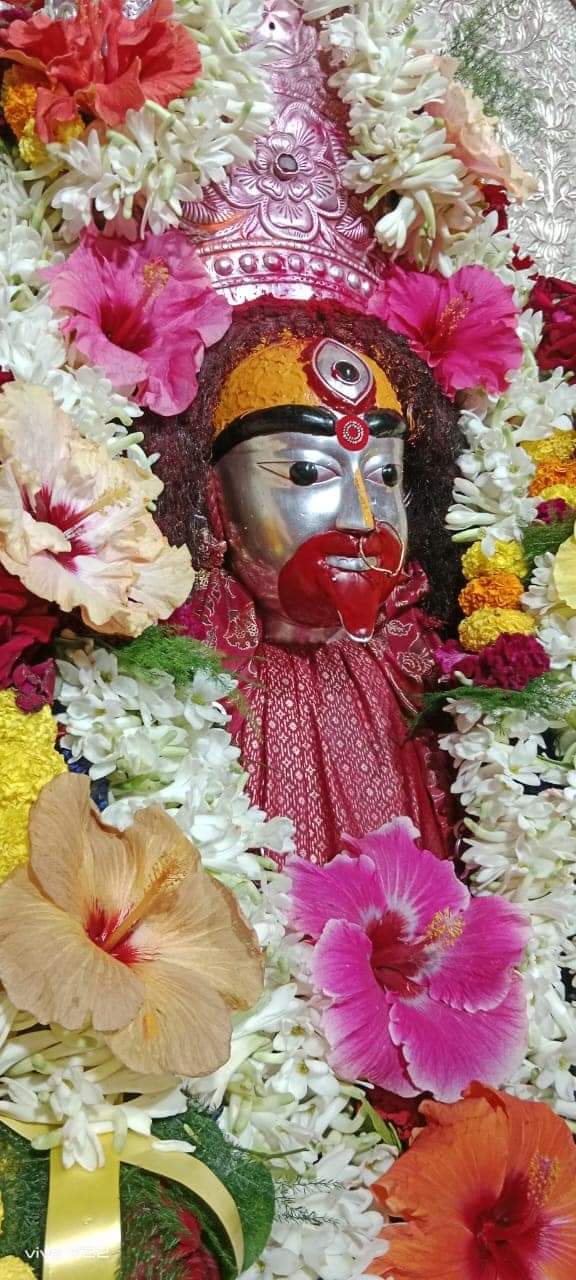
Pictured: The idol of Smashan Tara from the main temple in Tarapith, texted to me before the temple closure by one of the priests there, who I met via (get ready for this short, yet surprising dose of Indian networking) a Maths teacher who worships Kali, via the mother of my friend from IITB/Stanford.