You Will Not Be Fully Known
A Mythic Meditation on Saturn, Venus, Mercury—and the Expression of Innate Categorization Through Judgment and Discernment
The Fruits of Karma
Mythically speaking, Saturn and Venus have an interesting coupling.
Saturn is the stern grandfather archetype—the grudgy old man, the karmic enforcer. He is the one who ensures we receive the fruits of our past actions: the sweet and the bitter. But because we tend to dislike bitterness, Saturn is often remembered only for his punishments. We forget that he is also the hand behind our blessings. Most of us live in a kind of delusion, assuming we deserve only sweetness. When good fortune arrives, we accept it with gladness—“Of course, I earned this.” But when the bitter fruit shows up, we resist it. We fight it. We forget that both are karmic fruits. Saturn just delivers what is due.
Then there is Venus—the goddess of beauty, of fertility, of relational magnetism. She is the fountain of youth, the girl-turned-woman, the peak of feminine allure. She represents not just attraction but harmony, charm, and aesthetic grace.
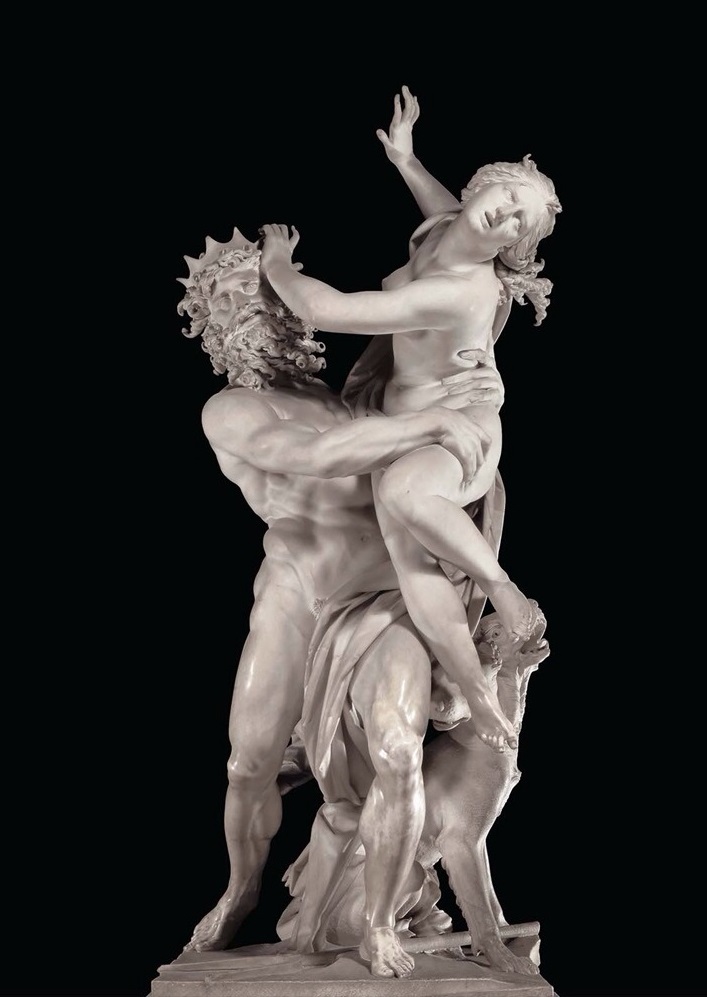
Now here’s the twist: Saturn, in all his stoic austerity, softens in the presence of Venus. He craves her. Even as he holds grudges against the world, he longs for her beauty, her sweetness. Venus, however, isn’t particularly drawn to Saturn. She doesn’t crave him in return. This one-sided longing gives rise to an astrological irony—Saturn is exalted in Libra, a Venus-ruled sign. Venus is quite meh towards Saturn-owned signs of Aquarius and Capricorn.
Libra is the sign of balance, of justice, of judgment. It is where Saturn, the judge, can execute karma with the greatest ease. Why? Because Libra wraps the harsh truth in beauty. The karmic fruits, both sweet and bitter, are delivered with diplomatic grace. Libra represents the bridge between self and other—the capacity to negotiate the relational field with fairness. But for Libra to do that well, the self must be well-rooted. Otherwise, the bridge collapses under the weight of others’ needs. This is the quiet tragedy of many Libra-dominant people—they lose themselves in the name of connection.
Judgment and the Intellect
Judgment is born from the Intellect. The Intellect (Budhi), ruled by Mercury (Budha), thrives on Categories. It discerns. It differentiates. Without categories, the intellect has no terrain. This is why Mercury is exalted in Virgo, a sign of precise classification—and debilitated in Pisces, the sign of spiritual dissolution. In Pisces, there are no clear boundaries. Everything merges. Nothing is “this” or “that.” But Mercury needs distinctions—clean/unclean, self/other, good/bad. That’s its whole domain.
Duality is the atom of categorization. Differentiation into two seeds the infinite complexity of life—each being a unique configuration of patterns. And paradoxically, when the intellect has differentiated enough, it begins to spiral back toward unity. Through full appreciation of difference, we glimpse the truth of oneness.
That is the intellectual path toward the death of the intellect. Gyan Yoga. The debilitation of Mercury in Pisces. A felt sense of debilitation, mind you, only if Mercury resists its own eventual Death.
Now—intellect is a human trait. And that’s not to say other beings don’t have access to it. But humans seem to operate with a distinct intensity of categorization. At the very least, all humans possess the ability to make distinctions. The simplest, most primal of these is safe or unsafe—a categorization we share with animals, embedded in what’s called the reptilian brain.
But the human intellect goes further. It creates hierarchies. These hierarchies reflect our values—some conscious, some subconscious. When we perceive, we categorize. And when a category sits within a value-laced hierarchy, judgment arises.
The Masculine Sword, The Feminine Turn
Now the expression of that judgment differs across polarities.
The masculine expression of judgment is outward and penetrative—most often through words. This is Saturn as judge, sitting on his throne and delivering verdicts that can slice deep. If that Saturnian judgment is not balanced by the grace of Libra, it can devastate the one who receives it. And when judgment comes not from Saturn’s throne, but from a more fiery, impulsive place—like Aries—Saturn is debilitated. His clarity collapses into reactive sharpness. In Aries, the sword of discernment is swung too soon, without weight, without wisdom. The result is judgment as outburst rather than offering.
This is where our culture falters: we confuse the act of judgment with the impact it has. We forget to ask—was it Saturn in Aries, quick to strike, unable to wait for the ripening? Or was it Saturn in Libra, weighing, waiting, delivering truth wrapped in grace? Some judgments deserve to be met with a sword of our own—clear rejection. Others deserve to be bowed to, even in their discomfort, because they carry the flavor of karmic offering. But instead of assessing the judgment—discerning its flavor—we often collapse into shame. We forget to receive it like a warrior would: with sovereignty, not collapse.
And so, when shame rises, we lash out at the one who named it. That’s one way to live. Many choose that path. That’s one way to live. Many choose that path.
But in a paradigm where my experience is my responsibility, and your experience is yours, we find freedom. We remember that we can choose to distance ourselves from humans who consistently feel bad to be around. That’s an option. Especially so in the digital world, where our participation is entirely elective.
Another way to receive judgment, especially when rooted in one’s own individuation, is to use it as a mirror. To notice: does this judgment land? Does it awaken shame? If so, where is that shame coming from? Why does this opinion pierce me? What wound is it brushing against?
In that moment, judgment becomes a gift.
A flash of Light on a hidden shame.
And then the right response—if one is able to hold it—is gratitude. Thankfulness for the masculine force that named something. For the sword that cut through, revealed something unseen, and offered the chance to see oneself more clearly.
Now, the feminine—purely Venusian—expression of judgment is different. It doesn't come as a verbal decree. It comes as movement. As withdrawal. As turning away.
What the woman subtly moves away from becomes a gift for a well-attuned man, because it reveals where he stepped forward in a misattuned way. It sharpens his clarity. It teaches him to move with more balance—physically, energetically, relationally. Similarly, what the electorate moves away from, is a gift for the well-attuned politician. He reroutes instead of resist™️ing. The misattuned double down.
For a while, I’ve felt personally plagued by the agony of unclear no’s—something I’ve also discussed with other men. The frustration of women being unable to say a direct ‘no.’ And yes, I know many women who are actively doing the work to reclaim their verbal boundaries. And yet—I’ve softened in my understanding of how profoundly difficult it can be for a woman to say ‘no’ aloud. Beyond the trauma-induced difficulty, what has humbled me even more is the realization that it may not even be necessary for a relationship to ever reach a verbalized ‘no’—that a spoken ‘no’ is the final station on a long journey of misattunement.
When I demand verbal clarity from a woman, it usually arises from the cruel edge of the Saturn archetype—the grudge-bearing grandfather who says, “Say it! Spell it out!” But contrast that with Saturn’s exalted self, the one who carries the burden of karmic truth with gratitude, and delivers it with grace, wrapped in Venusian softness. His judgments land not as punishments, but as invitations—offered in such a way that even the bitter fruit can be received without collapse. And in those moments, something sacred becomes possible: a reckoning that restores rather than punishes, that clarifies rather than condemns.
Whenever a woman has had to verbally express a No to me, I can now look back and see that the signs were already present. Her energy had turned. Her field had shifted. And I, in my lustful pursuit, chose not to see it.
Again, we find the Saturn-Venus dynamic. Saturn chases. Saturn judges directly. Venus expresses judgment through subtle disarmament—by withdrawing, by softening away, by not moving toward. And that, too, is a form of discernment. A kind of “No” that is deeply feminine.
Disarmament and the Dance of Relationship
I’ve come to see that what I used to interpret as soft rejection, I now feel attracted to—not from a place of chasing avoidance, but from a deeper respect for subtle discernment. I’m drawn to the glow of disarmament in a woman—that quality of openness and soft witnessing, even in response to a quiet boundary. It signals sovereignty. It signals truth.
And navigating that space—feminine discernment—requires a different kind of speech. Not the direct cutting of Saturnian judgmental language, but the indirect, playful, poetic speech of Mercury. It is not “say what you see.” It is “speak around the thing, so that the other may find their own meaning.”
Mercury governs speech. And just like the duality of Mercury, speech contains a duality—direct and indirect. To speak directly is one kind of love. To speak indirectly, wrapping a truth in ambiguity and grace, is another. Both are valid. Feminine judgment often lives in the latter.
As someone who dreams of a pluralistic world of individuated beings—it is humbling to realize that whatever I perceive and judge in another can never be the whole of them. Judgment, at best, is a glimpse. A partial seeing.
There must be room for mystery.
Because if I could fully see another being, there would be no wonder left in relationship. And the whole point—the magic of the manifested universe—is the dance. The not-knowing. The unfolding. The beauty of souls revealing themselves slowly to one another, again and again.
That is the true genius of Venus. Not just the beauty of what is visible—but the soft refusal to be fully known.
For those immersed in Jyotish, perhaps this essay offers a fresh intuition for why Saturn, Mercury, and Venus are considered natural friends in the study of planetary strengths. Each rules one of the Air signs, and together, through the interplay of speech, discernment, and justice, they offer a shared gateway into the subtle art of relating.